
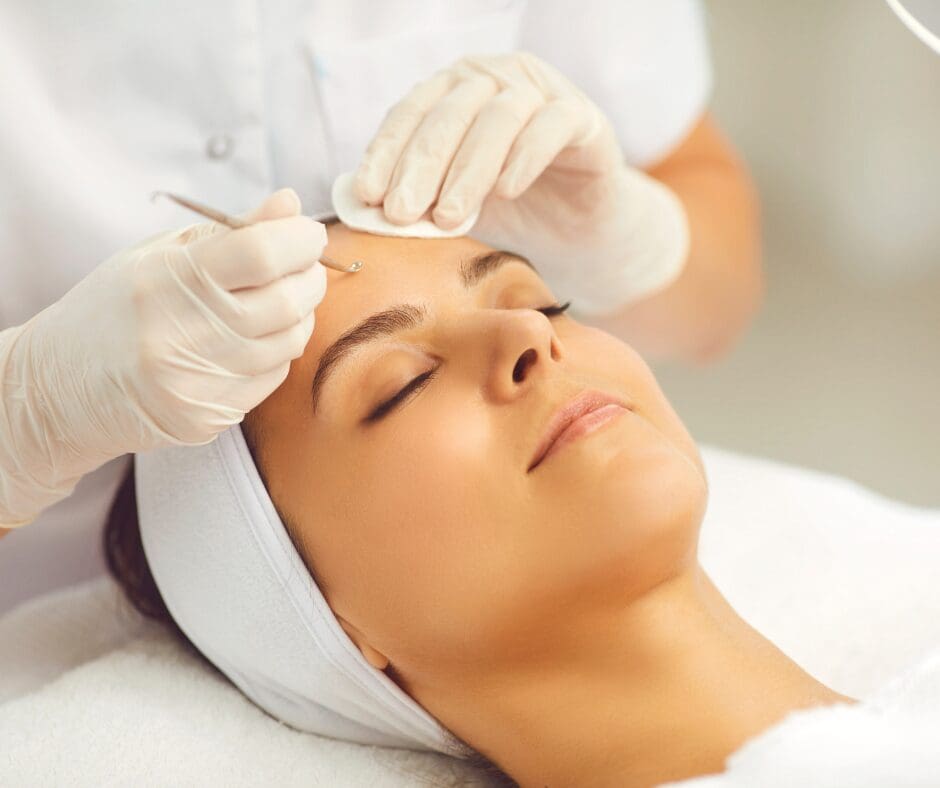
Of all the questions the team at Evolution hears about dermaplaning, this is the one that comes up most consistently, and it is also the one keeping the most people from booking a treatment they would genuinely love. Someone will read glowing reviews about how smooth and radiant their skin looks after a session, get excited about booking, and then pause because a friend, a comment section, or a half remembered article told them their peach fuzz will grow back darker and coarser than before.
It is time to put that myth to rest properly.
What Dermaplaning Actually Does
Dermaplaning uses a sterile professional quality skincare blade to gently glide across the surface of the skin, removing the top layer of dead skin cells along with vellus hair, more commonly known as peach fuzz.
The result is immediately visible. Skin looks smoother, brighter, and noticeably more even in texture, and makeup applies more seamlessly because there is no longer a layer of fine hair creating texture underneath it. It is a purely surface level treatment, addressing what already exists on the skin rather than altering anything happening beneath it.
Why the Thicker Hair Myth Exists in the First Place
This misconception has been around for decades, and it did not start with dermaplaning specifically.
It comes from the same misunderstanding people have long had about shaving. When hair is cut rather than pulled from the root, it is cut at a blunt angle instead of the naturally tapered point it would have if it grew out on its own. That blunt tip can feel coarser to the touch for a short period as it grows back in, and it can also appear slightly darker simply because the tip has not yet been exposed to sunlight and the natural fading that comes with it.
Neither of these things means the hair itself has changed. It is the same hair, growing back the exact same way it always has, just with a temporarily blunt tip instead of a tapered one.
What the Research and the Experts Actually Say
Hair growth is determined by the hair follicle beneath the skin, specifically by genetics and hormones, not by anything that happens to the visible hair above the surface. Cutting hair, whether with a razor, scissors, or a dermaplaning blade, does not reach the follicle or affect it in any way.
This has been studied and confirmed repeatedly across dermatology research for years, and it is one of the more well established facts in skincare, even though the myth itself has proven remarkably persistent in casual conversation and social media.
What You Can Actually Expect After Treatment
In the days following a dermaplaning session, clients typically notice their skin looking brighter and feeling noticeably smoother almost immediately, since dead skin buildup and fine hair are no longer sitting on the surface to catch light and create texture.
As the vellus hair grows back in over the following weeks, it returns exactly as it was before treatment, fine, soft, and barely noticeable, the same as it has always been. There is no thickening, no darkening, and no permanent change to the hair itself.
Who Dermaplaning Is a Good Fit For
Dermaplaning works well for most skin types and is a particularly good option for anyone dealing with dullness, uneven texture, or a buildup of dead skin that makeup tends to sit on top of rather than blend into. It also pairs beautifully with other treatments, since removing that top layer of dead skin and fine hair allows serums and other skincare products to absorb more effectively afterward.
Clients preparing for a special event often schedule it a few days beforehand specifically for that immediate, camera ready glow. It is generally not recommended for anyone with active acne breakouts in the treatment area, since the blade can aggravate inflamed skin, which is exactly the kind of detail the team at Evolution walks through during a consultation before any treatment begins.
Go Ahead, Girl. Make the Appointment.
Dermaplaning does not make facial hair grow back thicker, darker, or in greater quantity. That belief is a long standing myth rooted in a basic misunderstanding of how hair grows, not in anything unique to the treatment itself.
What dermaplaning does offer is real, visible results, smoother texture, a brighter complexion, and better product absorption, without any of the downsides the myth suggests. If this concern has been the only thing standing between you and a treatment you were otherwise curious about, hopefully this clears the way to finally book it.
Call or text 732-336-9847 with any dermaplaning questions you have, or book an appointment online for a consultation with any of our skincare professionals.
About the Author
Evelyn is the owner and lead lash artist at Evolution Lash Studio + Spa in Sea Girt, NJ, with 26 years of experience in the beauty industry. She is the only Allergy Conscious Artist in Monmouth and Ocean counties, and one of few in New Jersey, specially trained to work with clients who have experienced sensitivity or reactions to lash adhesive elsewhere.

Design by Ederra Design | Managed by Divergent Marketing and Branding
©2026 Evolution Lash Studio & Spa
Policies
Terms & conditions
